

BRAKe repair SERVICES
$50 off BRAKE SERVICE ($25 off retail per axle)
Some restrictions apply. Not valid with any other discount or offer.
Brake Repair & Service in Columbus, OH
Your brakes are the most important safety system in your vehicle — nothing else comes close. Every other system helps you go; brakes are the only thing that helps you stop. When they're working properly, you take them for granted. When they're not, you feel it immediately: longer stopping distances, noise, vibration, or a pedal that doesn't feel right.
At Petty's Auto & Electric Service, we inspect the full brake system — not just the pads. Pads wear out, but so do rotors, calipers, hoses, hardware, and brake fluid. A thorough inspection catches problems at every level, so you're not back in six months with a related failure that should have been caught the first time.
Signs Your Brakes Need Attention
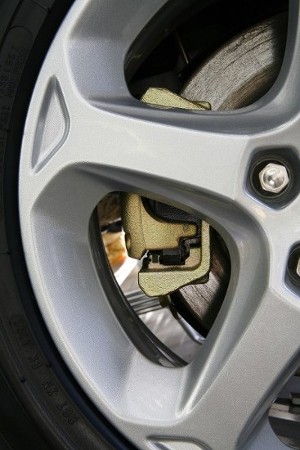
Brakes give you warning signs before they fail completely. Don't ignore these:
- Squealing or squeaking when braking — most brake pads have a built-in wear indicator that produces a high-pitched squeal when the pad is getting thin; this is your early warning
- Grinding noise — metal-on-metal contact means the pads are completely worn through; every stop is now damaging the rotors and potentially the calipers
- Soft or spongy brake pedal — the pedal travels further than normal or feels mushy; this can indicate air in the brake lines, a fluid leak, or a failing master cylinder
- Vibration or pulsing when braking — usually caused by warped or unevenly worn rotors; you'll feel it through the pedal and sometimes the steering wheel
- Vehicle pulls to one side when braking — a stuck caliper, collapsed brake hose, or uneven pad wear is causing one side to grip harder than the other
- Brake warning light on the dashboard — could signal low fluid, worn pads (on vehicles with pad wear sensors), or an ABS fault
- Burning smell near the wheels — a stuck caliper can overheat the brake, boil the fluid, and create a chemical smell; stop driving and have it inspected immediately
Our Brake Services
We use quality parts and inspect the full brake system — pads, rotors, calipers, hardware, hoses, fluid, and the electrical components that control ABS and traction control.
Brake Pad Replacement
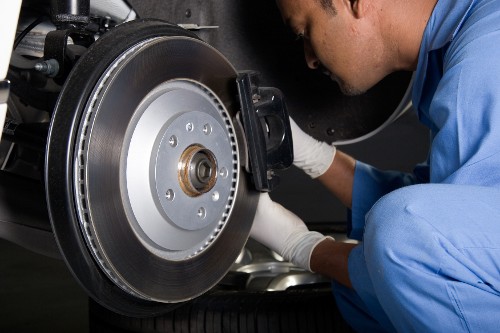
We install premium brake pads matched to your vehicle and driving style — ceramic for quiet, low-dust daily driving, or semi-metallic for heavier vehicles and towing. Every pad job includes cleaning and lubricating caliper slides and hardware so the new pads wear evenly.
Rotor Resurfacing & Replacement
Warped or worn rotors cause vibration and reduce braking efficiency. We measure thickness and runout to determine whether resurfacing can restore a smooth braking surface or replacement is needed. We never install new pads on damaged rotors — the pads won't seat properly and you'll be back with noise in weeks.
Caliper & Hardware Service
Sticking or seized calipers cause uneven pad wear, pulling, and overheating. Corroded slide pins and worn hardware cause noise and premature pad failure. We clean, lubricate, or replace calipers, brackets, pins, and all related hardware to ensure even, consistent braking.
Brake Fluid Flush
Brake fluid absorbs moisture over time, lowering its boiling point and promoting internal corrosion. We flush the old fluid from all four corners and replace it with fresh DOT-spec fluid. Most manufacturers recommend this every 2 to 3 years — it's inexpensive insurance against hydraulic component failures.
Brake Line & Hose Inspection
Steel brake lines corrode from the outside, especially in salt-belt states like Ohio. Rubber flex hoses deteriorate internally, sometimes collapsing and trapping pressure in a caliper. We inspect lines and hoses for corrosion, swelling, cracking, and leaks — and replace them before they fail.
ABS & Brake System Diagnostics
ABS warning lights, traction control faults, and electronic brake distribution issues require scan tool diagnostics to read codes and live data from wheel speed sensors, the ABS module, and related circuits. As an electrical specialty shop, this is where our expertise gives you an advantage.
Why Choose Petty's Auto for Brake Repair?
Full System Inspection
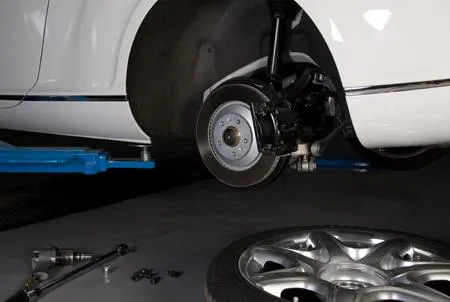
We don't just swap pads. We inspect rotors, calipers, hardware, hoses, lines, and fluid — because a brake job that ignores a stuck caliper or corroded line isn't really a brake job.
ABS & Electrical Expertise
Modern brakes are electronically controlled. ABS sensors, modules, and wiring faults require scan tool diagnostics — and that's our specialty.
Classic & Modern Vehicles
From drum brakes on vintage cars to multi-piston calipers on modern trucks, we service all brake system designs — including hard-to-find parts for older vehicles.
Transparent Estimates
We show you what we found, explain what needs to be done now vs. what can wait, and give you a written estimate before turning a wrench. No surprises on the invoice.
Brake Repair FAQ
Common questions Columbus drivers ask about brake service and repair.
How do I know if my brakes need to be replaced?
Squealing or grinding noise, a soft or spongy pedal, vibration when braking, the vehicle pulling to one side, or a brake warning light. Grinding is especially urgent — it means pads are worn through and metal is contacting the rotor, causing damage with every stop. If the pedal goes to the floor, that could indicate a hydraulic leak — have the vehicle towed rather than driven.
How much does brake repair cost in Columbus?
Pad replacement typically runs $150 to $350 per axle. Rotor resurfacing adds $100 to $200 per axle; rotor replacement is $250 to $500 per axle. Caliper replacement is usually $200 to $450 per caliper. Brake fluid flush runs $80 to $150. We inspect the full system and provide a written estimate before work begins.
How long do brake pads last?
Between 30,000 and 70,000 miles depending on driving habits, pad material, and conditions. City driving, heavy braking, towing, and hilly terrain wear pads faster. Highway driving with gentle braking extends life significantly. We can check thickness during any service visit.
Can I drive with grinding brakes?
You shouldn't. Grinding means metal is pressing against the rotor, damaging it with every stop and significantly increasing stopping distance. What could have been a pad replacement becomes a rotor and caliper job. Get them inspected as soon as possible.
Why does my steering wheel shake when I brake?
Almost always warped or unevenly worn rotors. They develop thickness variations from heat cycling, especially if lug nuts were overtightened. Depending on severity, rotors can sometimes be resurfaced. If they're too thin or too far out of spec, replacement is the better option. We measure thickness and runout to determine the right approach.
How often should brake fluid be replaced?
Every 2 to 3 years regardless of mileage. Brake fluid absorbs moisture over time, lowering its boiling point and promoting internal corrosion in lines, calipers, and the master cylinder. A flush is inexpensive insurance against much more costly hydraulic failures.
Your Brakes Are Your Most Important Safety System — Treat Them That Way
Whether you need a quick pad replacement or a full brake system overhaul, the team at Petty's Auto & Electric Service will get it done right. Serving Columbus, Westerville, Worthington, Gahanna, New Albany, Lewis Center, Powell, and the surrounding areas.
Request an Appointment Or call (614) 224-5566

Address

Address
330 Washington Ave
Columbus OH 43215

Hours of Operations
Monday-Friday; 8 a.m.-6 p.m.



Copyright © 2026 by Alpha Automotive, LLC.